Growing Pains and Future Gains: Why Talent Strategy Is a COO’s Greatest Gift
November 11, 2025
Growth can be both exhilarating and exhausting. As organizations scale, COOs often face the challenge of turning growing pains into future gains. The answer? A people-first talent strategy that evolves with your business. Learn how a proactive approach to hiring, development, and performance alignment can transform strain into strength and set the foundation for long-term success.
Estimated Read Time: 8-10 Minutes

The Perfect Present for the Ideal Future
Growth is the goal. But sometimes growth hurts, and while you strive for a “people first” mentality, what’s happening behind the scenes calls for tough decisions.
Every COO knows that moment when success starts to stretch the seams: demand surges, costs climb, and the team that once delivered with agility begins to strain under its own weight. What looked like momentum now feels like tension.
These are the growing pains. And they’re not a byproduct of failure; they’re the signal that you’re scaling. The question is: Will your people strategy scale with you? Or will it be the one thing that breaks?
At Titus Talent Strategies, we believe that talent strategy is the COO’s greatest tool, not just for hiring, but for performance, engagement, and long-term resilience. It’s the people who make up your organization. What they contribute, and more importantly, HOW they contribute, can be the defining factor in healthy growth. If you’ve ever broken a bone or had dental work done, you know that how the bone is set will impact the trajectory of healing. Set it well, and you’re on track to healing. Set it poorly, or let it do its own thing, and you risk causing irreparable damage.
1. Growth Reveals What Success Hides

When your company was smaller, the org chart was flat, communication was clear, and every hire seemed manageable. But scaling changes everything. Hierarchies emerge. Silos form. Velocity slows. And desperately, you’re asking whether your people, processes, and structure can handle this next wave.
Here’s the catch: People grow, often faster than their roles do. Top performers develop new skills, ambition, and vision. Suddenly, the seat you hired them into feels too small. If you ignore that misalignment, high-potential talent either stagnates or leaves.
That’s not just a “people issue.” It’s a core operational risk.
2. When Talent Outgrows Their Seat
Let’s call this what it is: a talent bottleneck. Your best people, the ones you thought would carry you forward, are now running against limits. They’ve outgrown their seat.
- The technically brilliant engineer wants to drive strategy, not just fix bugs.
- The high-performing manager wants to lead more than just their team; they want to develop leaders.
- The loyal and capable executor craves direction, influence, and growth.
Ignoring this mismatch is a mistake. It’s operationally dangerous because:
- It creates friction; high performers feel miscast, under-leveraged.
- It stifles growth because people are doing less than they’re capable of.
- It increases turnover risk because there’s no place for their next step internally.
At Titus, we often frame this under our “Right Seat, Right People” principle. But for COOs, it’s not just about placement; it’s about growth alignment, matching roles and growth trajectories so you retain your best while scaling, and laying the foundations for the next group of hires that will take you to the next level.
3. The High Cost of Ignoring Growing Pains

If your talent strategy isn’t aligned with your scaling strategy, you’re going to pay for it in cost, morale, and efficiency. Very few things can harm an organization with a great mission, product, or service more than when its people become jaded and morale drops.
Consider some of these hard truths backed by research; it’s science, so you know it’s true:
- Employee disengagement costs the global economy $8.8 trillion in lost productivity; that’s roughly 9% of global GDP. (Gallup.com)
- In teams ranked in the top quartile for engagement, profitability is 23% higher, and productivity (sales) is 18% higher, compared with the bottom quartile. (Gallup.com)
- High-turnover organizations pay a steep price: replacing a mid-level employee can run 75–125% of their annual salary. (Applauz)
- Disengaged employees show up less, perform less, and ultimately cost $3,400 for every $10,000 they make in salary, according to Gallup. (Engagement Multiplier)
- According to People Element, disengaged workers’ lost productivity can equal 18% of their annual salary, and replacing them can cost 2x their salary. (People Element)
These aren’t HR-only problems. They are operational risks — bleeding your margins, dragging down performance, and threatening your ability to scale profitably.
4. Talent Strategy Isn’t Just About Hiring — It’s the Framework for Engagement and Growth
Here’s where COOs get powerful — when they treat talent strategy not as an expense, but as the operational backbone of their business.
Engagement as Operational Infrastructure
Employee engagement isn’t fluff. Deloitte’s research shows that executives increasingly treat engagement as a “business-critical issue,” yet many organizations still only measure it annually, or not at all. (Deloitte)
But organizations with high engagement outperform in every dimension:
- They grow 2.3x faster in revenue over three years vs. low-engagement peers. (Deloitte )
- They retain talent more effectively, reducing the disruption and cost of turnover.
High engagement is a competitive advantage; not just a “nice-to-have.”
Growth & Development That Aligns with Scale

Talent strategy is your lever for creating bench strength and preventing stasis. When you plan for future roles and invest in development, you give high performers a reason to stay — and a path to contribute at ever-higher levels.
According to Thirst, 94% of employees said they’d stay longer at a company that invested in their professional development. (Thirst)
Leadership development and career mobility are among the most critical drivers of retention and engagement.
Succession Planning as Risk Mitigation
For a COO, succession isn’t optional; it’s insurance. Without it, you risk key-person dependency, structural bottlenecks, or a chaotic talent vacuum when pivotal leaders move on.
Investing in talent strategy means proactively identifying and developing the leaders of tomorrow — not scrambling when you suddenly need them. These leaders often have the benefit of being intimately acquainted with your organization’smission AND having developed trust with their peers; this level of team togetherness can be potent.
5. Turning Growing Pains into Performance Gains: A COO’s Playbook
Here’s where strategy meets action. As a COO, you can lean into your growing pains and use them as feedback, not just friction.
- Measure What Matters
Build dashboards that integrate talent and operational metrics. Track things like:
- Cost per FTE
- Revenue or output per role
- Engagement and turnover trends
- Realign Roles & Seats
Conduct regular talent reviews. Ask:
- Who’s outgrown their role, or is on a trajectory that is stretching them beyond their seat?
- Who’s ready for more?
- Where are structural gaps in future org design?
- In the EOS® world, we call this the GWC – Get it, Want it, Capacity. Does the individual understand their role and deliverables? Do they want it? What is their capacity to sustain or add to what they are doing? If one of these is off, then performance and or morale will likely drop.
- Invest in Growth Infrastructure
Build development paths, cross-functional opportunities, and mentoring programs. Tie them directly to business roadmaps, not just HR initiatives.
- Engagement as a Strategic Tool
Use regular pulse surveys, feedback loops, and data analytics to continuously improve the work environment. Engagement is not a one-off; it’s an ongoing operational lever.
- Succession Before You Need It
Identify and groom future leaders. Use talent strategy to forecast capacity and leadership gaps before they become crises.
- Leverage Technology Thoughtfully
Use AI and automation not just to reduce cost but to free up your top talent for strategic, high-impact work. Let technology amplify your people — not replace them.
6. Why This Matters Now
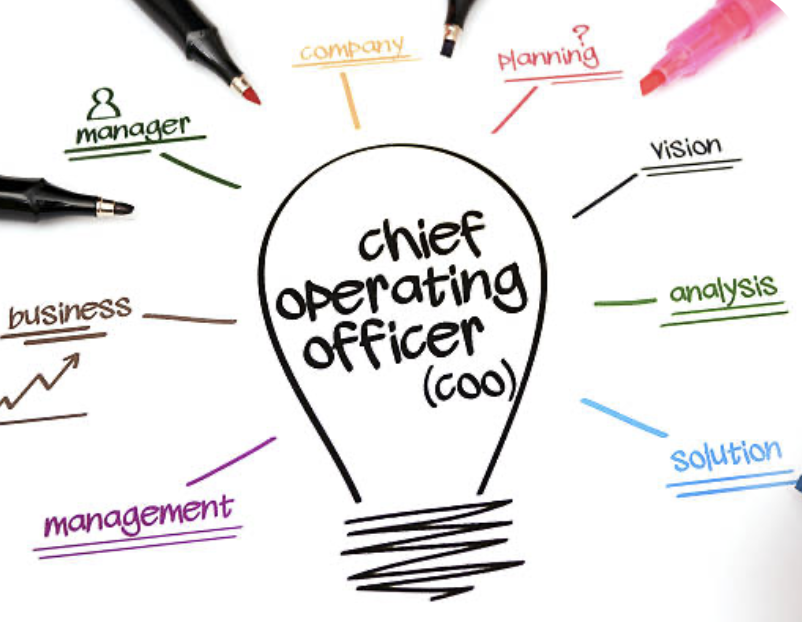
COOs today operate in a world where scale is expected, but fragility is real. Growth isn’t just about doing more; it’s about doing it without breaking.
Without a deep talent strategy, growing pains can turn into breakdowns. Disengagement becomes a drain, high-potential employees walk out the door, and productivity plateaus, despite increasing headcount.
But with the right talent strategy, every point of tension becomes an opportunity. You build for capacity. You invest in people. You design for durability.
Your people become your operating system, not just hired hands.
The COO’s New Superpower
The most effective COOs don’t just manage growth, they shape it. And the tool they use? Talent strategy.
When deployed correctly, talent strategy isn’t just a function of HR; it’s your operating lever. It aligns cost, performance, engagement, and growth. It builds bench strength before you need it. It turns your high performers into future leaders. And it helps your organization scale, not just in size, but in impact and resilience.
Ready to Turn Your Growing Pains into Strategic Gains?
At Titus Talent Strategies, we partner with COOs who refuse to let scaling break them. We help you build a talent strategy that’s operational, scalable, and deeply human.
- Want to align your talent investment to your business outcomes?
- Need a structure that supports growth without fragility?
- Looking to build leadership capacity before the gaps emerge?
Download The COO’s Guide to Building a High-Performing Organization – your practical playbook for turning people into performance, and performance into lasting advantage.
Or reach out to us at TitusTalent.com. Let’s build the kind of organization that can thrive today and own the future.
Let's Start a Conversation
TITUS INSIGHTS
Refreshing perspectives and practical expertise from the Titus team.