When Interviews Fail Candidates: Question Your Questions Before You Dismiss Their Answers
April 28, 2026

Great candidates are being passed over every day, not because they weren't right for the role, but because the interview never gave them the conditions to prove it. Here's what separates the interviewers who find great talent from the ones who accidentally bury it.
Reading Time: 10-12 Minutes

Most interviews are like digging a hole. Someone shows up with a call guide, works through it question by question, and measures success by how much ground they covered. They extract what they came for, file the notes, and move to debrief. Fast, efficient, and almost entirely beside the point. Because the thing about digging a hole is this: you find what survives the shovel. And the most important things rarely do.
The best interviewers don’t dig holes. They act like archaeologists and run excavations. The difference between those two approaches — in mindset, in method, in outcome — is one of the most underestimated variables in the entire hiring process.
At Titus Talent Strategies, we’ve spent years coaching hiring teams, embedding with organizations, and running searches across industries. The single most consistent finding? Interview quality determines candidate performance far more than most hiring teams realize. Not candidate quality. Interview quality. The conditions the interviewer creates determine what the candidate is able to show. And most interviewers have never been trained to create the right conditions at all.
The Shovel vs. The Brush
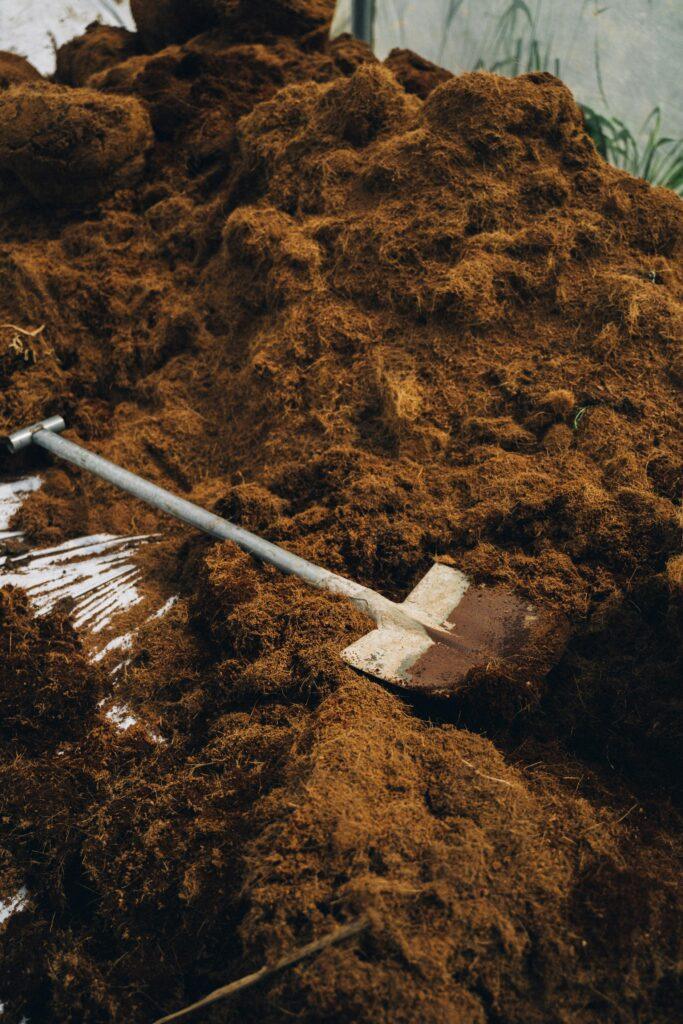
An archaeologist and someone digging a hole can both end up in the same trench, same depth, and same dirt, but yield completely different results.
The hole-digger is optimizing for speed and coverage. They have a checklist. They move through it. They’re looking for confirmation if a candidate ticks the boxes, and they find exactly that, or they don’t. What they almost never find is what wasn’t on the checklist. The artifact was two inches to the left of where they were digging. The capability didn’t surface because the question didn’t create the right conditions for it to appear.
The archaeologist operates on an entirely different set of assumptions. They know that the site contains more than they can currently see. They know that how they approach the surface determines what survives the excavation intact. They read the terrain before they disturb it. They move methodically; not because they’re slow, but because they understand that forced extraction destroys the very thing they’re trying to find.
That is the trained interviewer. Patient, purposeful, and deeply aware that the artifact breaks if you force it.
Simon Sinek’s work on leadership argues that the best leaders don’t demand performance; they create the environments in which performance naturally emerges. The same principle applies here. The best interviewers don’t extract answers. They build the conditions in which the right information rises to the surface on its own. And that requires a fundamentally different kind of preparation than memorizing a call guide.
What the Data Says About Interview Quality
The hiring conversation in most organizations focuses almost entirely on candidate quality. The interviewer is treated as a neutral instrument; a camera, not a variable. That assumption is wrong, and the cost of it is high.
SHRM research consistently shows that structured, intentional interview processes outperform ad hoc ones in predicting job performance and reducing bias. But here’s the nuance most teams miss: structure in service of extraction produces data. Structure in the service of revelation produces insight. The call guide is a tool. What matters is the hands holding it.
Gallup’s candidate experience research is even more direct: 44% of recently hired employees say their interview experience was the single greatest influence on their decision to accept an offer. Not compensation. Not the job title. The interview. Which means the interview isn’t just how you evaluate candidates; it’s how candidates decide whether to bring their full selves to the table in the first place.
When a candidate senses they’re being processed rather than understood, they protect themselves. They give safe answers. They perform. And when candidates perform, you evaluate the performance — not the person underneath it. You hired the resume in conversational form. Not the human being who will show up to work.
Harvard Business Review identifies the best leaders, and by extension the best interviewers, as those who ask better questions. Not harder questions. Better ones. Questions that create space rather than demand compliance. Questions that invite reasoning rather than recitation. That shift, from interrogation to genuine inquiry, is where extraction ends, and revelation begins.
The Move From What to How

The most practical expression of the archaeologist’s mindset is a shift in the kind of questions being asked — specifically, the move from what to how.
What questions are resume conversations in disguise? They confirm experience. They gather facts. They tell you what someone has done. They are necessary, but they are the shovel. They move a lot of dirt. They rarely surface the artifact.
How questions are diagnostic. They reveal how someone thinks, how they lead, how they’d navigate the specific terrain of your role. They create space for a candidate to stop reciting and start reasoning. And the moment a candidate shifts from recitation to reasoning, the interview transforms. You stop seeing the performance. You start seeing the person.
This is the core of what trained interviewers do differently. They use what questions to establish context, and how questions to reveal capability. They know when to follow the script and when to set it down. They treat the call guide as scaffolding; useful for structure, not for truth.
A Real Excavation, In Real Time
Here’s what that looks like in practice: midway through a recent Titus search, a candidate was struggling. Long-winded, difficulty landing key points, nerves compressing what the behavioral data suggested was a strong profile. The easy move, and it’s always available, was to wrap early. The internal assessment at that point: give him one more question, then likely call it.
Instead, the lead interviewer made a deliberate choice. Set aside the call guide. Moved away from the initial competency-based what questions and toward role-specific how questions: how would you think about this challenge, how do you typically build trust with a new team, how would you approach the first ninety days. Tell me about the role you enjoyed the most; what made it so enjoyable?
The candidate changed. Not because he became a different person, but because the environment changed around him. The questions created room. The room created safety. And safety is where real capability lives. By the end of the call, the remark was made, “This interview is like a period drama. It starts slow, but before you know it, you’re invested.”
That candidate moved forward. He was right for the role. He just needed the right conditions to prove it. The difference between calling it at minute twenty-three and making a strong hire was not candidate quality. It was interviewer quality. It was the decision to pick up the brush instead of the shovel.
Nervous vs. Wrong: The Most Expensive Confusion in Hiring

One of the most consistently costly mistakes we see hiring teams make is treating nervousness as disqualifying. Nervousness is a response to conditions. Capability lives underneath conditions. They are not the same signal, and treating them as interchangeable costs organizations talent they never knew they had.
This is where behavioral science becomes genuinely useful, not as a post-interview scoring tool, but as a real-time interpretation guide. Predictive Index measures the natural behavioral drives that shape how someone communicates, makes decisions, and responds to pressure. A candidate with high Patience and Formality will open slowly and precisely. That rhythm can read as evasiveness or lack of confidence to an untrained interviewer. To a trained one, it’s a behavioral pattern; expected, readable, and entirely separate from the question of capability.
This is the archaeologist’s advantage. They’ve studied the terrain before they pick up the tool. They know what they’re likely to find, and they know how to read the surface before they disturb it. They don’t mistake the presentation of the artifact for the artifact itself.
At Titus, our Head, Heart, and Briefcase framework evaluates candidates across three dimensions: behavioral drive and cognitive approach (Head), motivational alignment and purpose (Heart), and technical competency and experience (Briefcase). But all three of those dimensions require an environment in which the candidate is settled enough to be themselves. A hole-digging interview surfaces the Briefcase at best. The Head and Heart — the dimensions most predictive of long-term fit, retention, and cultural contribution — only emerge when the conditions are right.
You cannot assess what the environment doesn’t allow to surface.
What Training an Interviewer Actually Means
The implication of everything above is direct: interviewer training is not optional. It is not a nice-to-have. It is not something that improves with experience alone. It is a discipline, and it requires deliberate development.
Most hiring managers have never been taught to interview. They’ve been handed a call guide and told to get going. That’s the equivalent of handing someone a trowel and calling them an archaeologist. The tool is not the training.
Trained interviewers share a consistent set of instincts that go beyond question selection:
They read the room before they read the guide. A long-winded answer isn’t automatically a red flag. It might be a behavioral pattern, a sign of nerves, or a signal that the question itself was the wrong entry point. Trained interviewers diagnose before they conclude.
They know the difference between silence and absence. A candidate who takes a beat to answer isn’t necessarily uncertain. They might be precise. The trained interviewer holds space rather than filling it.
They use behavioral data before the interview, not just after. Predictive Index profiles inform how you approach a candidate in the room; what pace they’re likely to operate at, how they process under pressure, what kind of question is most likely to open them up. That context turns observation into understanding.
They hold the script loosely. The call guide is a starting point, not a ceiling. The most important interview moments often happen when an interviewer has the confidence and the training to follow the thread that matters most, even when it’s not on the page.
They stay curious rather than evaluative. When candidates sense judgment, they protect themselves. When they sense genuine curiosity, they open. That shift in tone is one of the most powerful instruments an interviewer has, and it costs nothing except the willingness to actually be interested.
The Interview Is Part of the Hire

There’s a downstream consequence to interview quality that most organizations underestimate: the experience a candidate has in your interview shapes who they become as an employee, before they’ve even accepted the offer.
Gallup research shows that candidates who have exceptional interview experience are twice as likely to report that their job responsibilities matched what they were promised once they start. The interview sets expectations. It builds or erodes trust. It gives the candidate their first real signal of what your culture actually feels like from the inside.
An excavation says: We take the time to find the real thing. A hole says: we move fast and hope for the best. Candidates remember which one they experienced. And in a talent market where employer brand travels further and faster than most organizations realize, that memory matters well beyond the hire.
The Wrap Up
The best interviewers are not the ones with the sharpest questions. They’re the ones who understand that the interview is an environment — and that the environment they create determines what the candidate is able to show.
The hole-digger finds what survives the shovel. The archaeologist finds what was actually there.
Train your interviewers to tell the difference. Equip them with the behavioral data to read what they’re seeing. Give them the confidence to set down the script when the excavation requires it. And build a process that treats every interview not as an extraction exercise, but as an act of careful, disciplined revelation.
That’s where the best hires come from. Not the candidates who performed well under pressure. The ones whose real capability finally had the room to surface.
If your organization is ready to bring more intention to how you hire, from interview structure and behavioral benchmarking to Predictive Index alignment and full-process design, let’s start a conversation. And if you want to understand how your current hiring process measures up, our Talent Checkup is the right place to start.
Let's Start a Conversation
TITUS INSIGHTS
Refreshing perspectives and practical expertise from the Titus team.