Measure Twice, Hire Once: How to Vet Construction Hires
October 6, 2026

Construction hiring is already under pressure, but rushing the vetting process can create legal and reputational risk. Learn how to screen construction candidates for trustworthiness while staying compliant with EEOC rules.
Reading Time: 14 Minutes

A framer with a DUI from six years ago. A foreman whose last job ended after a theft accusation nobody ever proved. A crew lead who left his last company two weeks after starting with no explanation given.
Every one of those people might be exactly who you need to hire this month. Every one of those people is also, technically, a legal minefield, depending entirely on what you ask, when you ask it, and what you do with the answer.
Construction runs on trust in a way most industries don’t. A new hire gets keys to a client’s house, the controls of a $200,000 excavator, or a spot on a crew where one bad call puts someone in the hospital. Checking someone out before handing them any of that matters more than it does in most hiring decisions. But how you check them out is regulated in more ways than most people expect, and the industry’s current hiring crunch makes it easy to trip one of those wires without meaning to.
That’s the real problem hiding underneath “we can’t find good people”: the pressure to hire fast is colliding head-on with the discipline good vetting requires. Most industries can absorb a bad hire quietly. Construction usually can’t, because the mistake shows up on a jobsite, in a client’s home, or on an insurance claim.
The Industry Doesn’t Have Time to Inspect 349,000 New Hires

The construction industry needs to attract an estimated 349,000 net new workers in 2026 just to keep supply and demand in balance, according to a model built by Associated Builders and Contractors. That’s on top of normal turnover, and it’s before accounting for the wave of retirements moving through the trades: a workforce that skews older every year, handing project managers and superintendents fewer years to replace experience they can’t simply post a job listing for.
Firms feel it in real time. Eighty-seven percent of contractors report openings for hourly craft workers and 82 percent report openings for salaried roles, and for the large majority of them, those positions are as hard or harder to fill than they were a year ago, according to the Associated General Contractors of America’s 2026 Workforce Survey. Seventy-three percent expect to keep adding headcount over the next year regardless.
None of that leaves much room for a slow, careful hiring process.
Here’s the part that should worry contractors more than the shortage itself: 42 percent of firms report that new hires fail to show up or quit shortly after starting. That’s a fit and vetting problem surfacing after the ink is already dry on an offer.
The Other Side of the Blueprint
When a position sits open for weeks, trimming the vetting step to hire faster can feel like the only lever left to pull. It’s also how a contractor ends up on the losing end of a negligent hiring claim, the legal theory that holds an employer liable when it knew, or reasonably should have known, that a hire posed a risk to someone and put them in a position to cause harm anyway.

Construction is a uniquely bad industry to test that theory in. A negligent hiring case involving a Massachusetts company makes the point plainly: when an employee harms someone while working, the employer can be held liable even for what looks like a simple accident, and courts examine whether the company’s hiring practices were as thorough as they reasonably should have been. Hand someone the keys to a client’s home, the controls of heavy equipment, or supervisory authority over a crew, and “nobody checked” becomes Exhibit A in the lawsuit that follows.
None of this stays contained to the direct employer, either. General contractors routinely absorb reputational and legal fallout from a subcontractor’s bad hire, since the client on site rarely distinguishes between “our crew” and “the sub’s crew” when something goes wrong. In a negligent hiring claim, vetting functions as the load-bearing wall between a bad hire and your company’s liability.
Screening Harder Has Its Own Code Violation
Here’s where it gets complicated. The instinct to protect the business by screening harder (running a criminal background check on every applicant and rejecting anyone with a record) is exactly the instinct that has landed plenty of well-meaning employers in a discrimination claim.
Title VII of the Civil Rights Act prohibits policies that look neutral on paper but fall harder on some racial groups than others, a theory established in Griggs v. Duke Power Co. back in 1971. A blanket “no felons” policy is the textbook example, and it does real damage: conviction rates aren’t evenly distributed across racial groups nationally, so the policy hands a plaintiff’s attorney a chart they didn’t have to build. The EEOC’s long-standing guidance on criminal background checks recommends employers evaluate the nature of the offense, how much time has passed, and the nature of the job itself, a framework known as the Green factors, rather than excluding anyone with any record from any role.
Separately, 37 states and more than 150 cities and counties now have some form of “ban the box” law on the books, restricting when in the hiring process an employer can even ask about criminal history, often not until after a conditional offer.
One more wrinkle worth knowing: in 2025, the EEOC scaled back its own enforcement of disparate impact claimsfollowing an executive order directing federal agencies away from that legal theory. That sounds like less exposure. In practice, the underlying law is unchanged: private individuals can still sue directly in federal court, and most states ban the box and fair chance laws operate independently of whatever the EEOC prioritizes. The compliance risk shifted rather than disappeared, moving from the agency’s desk to a plaintiff attorney’s.
What Actually Passes Inspection
Vetting for reputation and staying compliant pull in the same direction more often than contractors assume. The employers who get sued are usually the ones who skipped the individualized part of the process, regardless of whether they checked backgrounds at all.

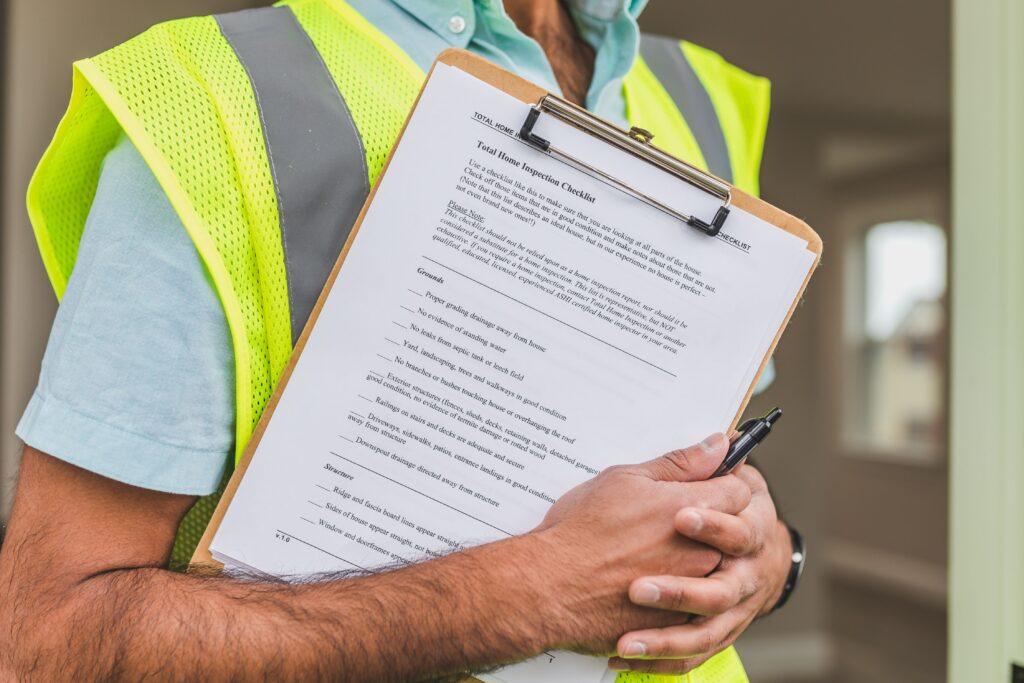
Anchor every question in the job itself. Ask what the role actually requires (access to client property, equipment operation, supervisory authority, a commercial driver’s license) and screen for those specific risks. A ten-year-old non-driving offense has nothing to do with whether someone should run a skid steer.
Skip the blanket rule. If a background check surfaces something, give the candidate a chance to explain it before acting on it, and weigh the offense, the time elapsed, and the job itself- the same Green factors the EEOC has recommended for over a decade. Document that you did it. A missing paper trail is what turns a defensible decision into an indefensible one.
Reference checks deserve the same discipline. Ask former supervisors about specific, job-related conduct: attendance, safety compliance, how someone handled a dispute on a site, rather than open-ended character questions like whether someone is generally “trustworthy.” Vague questions invite vague, bias-prone answers. Specific, behavior-based ones produce answers a firm can actually document and defend later.
Leave social media out of the hiring decision, or run it through a third party that filters out anything protected before it reaches you. Once a hiring manager sees a candidate’s age, religion, or pregnancy in a public photo, there’s no unseeing it, and if that candidate doesn’t get the job, that photo is now part of the story whether it should be or not.
If a background check runs through a third-party vendor rather than in-house, a separate federal law kicks in. The Fair Credit Reporting Act requires written disclosure and authorization before the check happens, and a two-step notice: first, a pre-adverse action notice with a copy of the report, then a final notice, before a firm can act on what it finds. Skipping that sequence is its own lawsuit, entirely separate from anything the EEOC enforces.
And know the carve-outs. Safety-sensitive roles, commercial drivers especially, are governed by separate federal drug and alcohol testing rules, which generally give contractors more room to act than a typical office hire would have. None of this replaces a conversation with employment counsel, especially given how much these rules shift by state and city.
Every Inspection Has Two Parts
The shortage is real, and so is the liability sitting on both sides of it: hiring without checking creates exposure the moment something goes wrong, and screening the wrong way creates exposure before anything even does. A one-sided inspection collapses under scrutiny, which is exactly why it helps to have a process that questions the job’s actual requirements every time and keeps a paper trail showing why each decision was made.
Every tradesperson already knows this rule from the framing square: measure twice, cut once. The extra ten minutes spent on an individualized assessment, a documented reference call, or a second look at a background check almost never feels urgent in the moment, next to a schedule that’s already behind. It’s also the cheapest time a firm will ever spend on a hire, because the alternative is losing weeks later to a lawsuit, a bad fit, or a crew rebuilding itself from scratch. Time spent measuring is never the time anyone remembers regretting.
Call it what it actually is: hiring that survives an inspection, whether that inspection comes from a client, an insurer, or a plaintiff’s attorney. In an industry this short on people, that kind of discipline is also a real competitive advantage: a well-documented process moves just as fast as a rushed one, and holds up far better under pressure.
Pass Inspection
Making a great hire in construction carries more pressure than it does in most industries. The cost of getting it wrong shows up fast, on the jobsite, in a client’s home, or in a claim, and the cost of moving too slowly shows up just as fast in missed deadlines and an already stretched crew. Finding someone you can genuinely trust with those stakes, on a timeline this tight, is hard even for firms doing everything right.
At Titus Talent Strategies, we focus on passive candidates: the people who aren’t actively applying anywhere and who never show up in the same rushed pool every other firm is pulling from under deadline pressure. Every candidate we bring forward is evaluated around head, heart, and briefcase first: how they actually work, what motivates them, and what they’ve done, matched against what the specific role demands, before a client ever sees a résumé. It’s the measure-twice-cut-once version of moving fast: a shorter, better-matched slate instead of a wider net cast under pressure.
If your firm is feeling that pressure and wants a partner who brings fewer, better-fit candidates instead of a faster stack of resumes, let’s talk.
Frequently Asked Questions
Can a construction company refuse to hire someone because of a criminal record?
Sometimes, though a blanket policy excluding anyone with any record from any job is exactly the kind of practice that draws a discrimination claim. Employers are expected to weigh the nature of the offense, how long ago it happened, and whether it’s actually relevant to the specific role, a framework the EEOC has recommended since 2012. That case-by-case approach holds up far better than an automatic no.
What is an individualized assessment, and is it required?
It’s a case by case review that looks at the offense, the time elapsed, and the job in question before an employer acts on someone’s criminal history, rather than excluding them automatically. It isn’t required by federal law in every circumstance, but many state and local ban the box laws require it directly, and it’s the strongest documented defense available if a hiring decision is ever challenged. Skipping it is one of the biggest risk factors in these cases.
Is it legal to check a candidate’s social media before hiring them?
Generally yes for public content, but it carries real risk because social media routinely reveals age, religion, disability, or family status, information an employer legally cannot use in a hiring decision. The safest approach is to avoid it entirely or route it through a third party that filters out protected information before a decision maker sees it. Once someone on your team sees it directly, that information is part of the process whether it was meant to be or not.
Does the EEOC still enforce disparate impact discrimination claims?
The agency scaled back its own investigation of standalone disparate impact claims in 2025 following a federal executive order, but the underlying legal theory under Title VII was not eliminated. Private individuals can still bring these claims directly in federal court, and most state and local fair chance laws operateindependently of EEOC enforcement priorities. Reduced federal enforcement is not the same as reduced legal exposure.
What’s the difference between ban the box compliance and EEOC compliance?
Ban the box laws are state and local rules about timing, mainly when in the hiring process an employer is allowed to ask about criminal history. EEOC compliance is about the substance of the decision itself: whether excluding someone based on their record is job related and consistent with business necessity. A contractor can technically follow one and still violate the other, which is why both need to be built into the same process.
Can we ask about a candidate’s safety record or past OSHA violations?
Yes, and for most construction roles you should. Safety history, prior citations tied to that individual’s conduct, and certifications are job related and squarely within what an employer can evaluate, unlike criminal history unrelated to the role. The key is documenting that the question and the decision are tied to the specific job’ssafety requirements.
What happens if we skip a background check and something goes wrong on the jobsite?
That’s the fact pattern behind most negligent hiring claims: an employer is held liable when it knew, or reasonably should have known through a reasonable check, that a hire posed a risk and put them in a position to cause harm anyway. In construction, where hires often have access to client property, heavy equipment, or supervisory authority over a crew, courts tend to expect a higher standard of care. Skipping the check leaves a firm defending the hire after something’s already gone wrong, with no paper trail to show any reasonable steps were taken beforehand.
Let's Start a Conversation
TITUS INSIGHTS
Refreshing perspectives and practical expertise from the Titus team.